
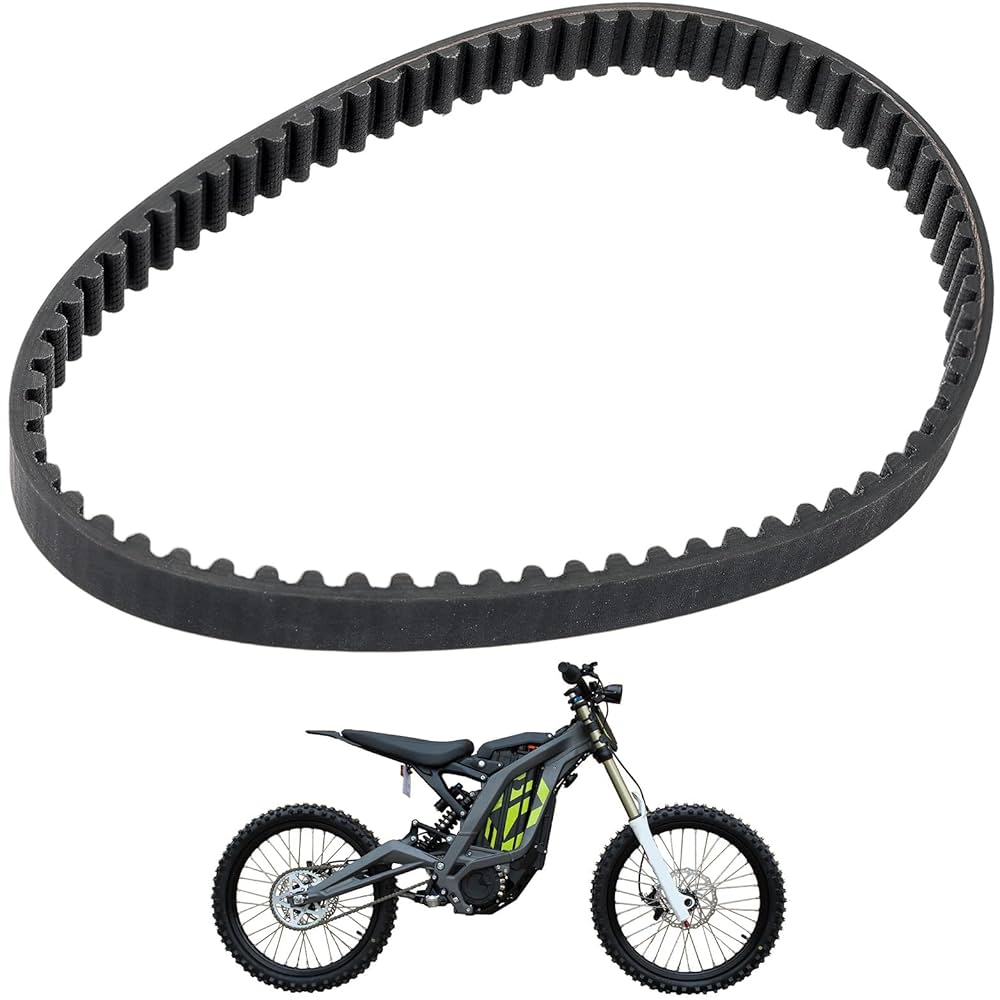
Surron Light Bee Primary Belt For Sale Online In Europe
1. What Is the Surron Light Bee Primary Belt?
Surron Light Bee Primary Belt For Sale Online In Europe is a toothed belt that connects the electric motor output shaft to the intermediate (jackshaft) pulley. This belt setup is part of a two-stage drivetrain system:
-
Stage 1 (Primary Drive): Motor to jackshaft via belt
-
Stage 2 (Secondary Drive): Jackshaft to rear wheel via chain
Surron Light Bee Primary Belt For Sale Online In Europe system is essentially what allows the motor’s high-revving power to be harnessed in a smooth, controlled, and quiet manner. It reduces noise compared to a fully chain-driven setup and provides a degree of shock absorption.
2. Technical Specifications
While specific belts may vary slightly depending on model year or aftermarket upgrades, here are the stock specifications:
-
Belt Type: HTD (High Torque Drive) or Gates PowerGrip GT3 (depending on model)
-
Tooth Profile: 8mm pitch GT3
-
Material: Neoprene or polyurethane body with fiberglass or carbon tensile cords
-
Length: Approx. 1040mm (130 teeth in many OEM setups)
-
Width: 15mm (varies by version)
-
Tension Method: Adjustable tensioner pulley
-
Mounting: Enclosed within a protective housing to reduce debris contamination
3. Advantages of the Primary Belt Drive
Surron Light Bee Primary Belt For Sale Online In Europe offers several advantages, especially over a traditional chain:
A. Quiet Operation
Electric motors are inherently quiet, and a belt further reduces the sound signature. This is valuable for riders in urban or suburban areas or for those who want a stealthy trail presence.
B. Low Maintenance
Belts require less lubrication than chains and don’t attract as much dirt and grime, especially when enclosed.
C. Lightweight
The belt drive system is significantly lighter than a steel chain-and-sprocket configuration. This improves handling and efficiency.
D. Smooth Power Delivery
Belts absorb shock and vibration better than chains, resulting in smoother acceleration and better traction control, especially on rough trails.
4. Common Issues and Limitations
Despite its advantages, the primary belt is also a known weak spot in aggressive riding conditions:
A. Belt Slipping or Snapping
Heavy off-road use, hard launches, or aggressive jumps can cause the belt to slip or even snap. This is especially common in upgraded Light Bees with more powerful controllers and 72V battery kits.
B. Wear from Debris
While the belt is enclosed, fine sand, stones, or mud can enter the housing and cause premature wear or misalignment.
C. Tension Issues
Incorrect belt tension can result in premature wear. Too tight, and it can snap under load. Too loose, and it may skip teeth under torque.
D. Limited Torque Capacity
While belts can handle substantial torque, they have a limit. Exceeding this, especially with high-output upgrades, often necessitates switching to a chain conversion for the primary drive.
5. Maintenance and Inspection
Proper belt maintenance is essential to ensure a long life and peak performance:
A. Regular Inspection
Check for:
-
Fraying edges
-
Missing or damaged teeth
-
Cracks in the belt body
-
Belt alignment across pulleys
B. Cleaning
Avoid pressure washing the belt area. Instead, use a brush or air to remove dirt. Belt cleaning sprays are also available for deeper cleaning.
C. Tension Check
Check tension after every few rides. The belt should flex slightly under finger pressure but should not be sagging. Many riders measure with a tension gauge or use the “deflection test” (e.g., 10mm deflection per 100mm span).
D. Alignment
Ensure pulleys are perfectly aligned. Misalignment leads to uneven wear and noise. If needed, use spacers or adjust the motor mounts.
6. Belt Replacement Process
Replacing the belt is relatively straightforward and can be done with basic tools:
-
Remove the Primary Cover: Use an Allen key to remove the bolts.
-
Loosen Tensioner: Relieve tension to remove the belt.
-
Inspect Pulleys: Clean and check for wear.
-
Install New Belt: Fit over pulleys, align carefully.
-
Re-tension: Use recommended tension specs.
-
Test Spin: Ensure smooth operation before closing the cover.
7. Upgrades and Aftermarket Options
Many performance riders replace the stock belt with upgraded options:
A. Gates Carbon Drive Belts
These are known for increased strength, carbon-reinforced cords, and better heat resistance. Ideal for 60V+ setups.
B. Chain Conversion Kits
For extreme riding, a primary chain conversion kit replaces the belt with a chain. It’s noisier but nearly unbreakable under high torque.
C. Upgraded Pulleys
Aluminum or steel pulleys with better machining tolerances reduce slippage and increase belt life.
D. Tensioner Upgrades
Spring-loaded tensioners provide automatic tension adjustment, reducing the need for manual checks.
8. Compatibility with 72V and Modded Light Bees
When upgrading the Light Bee from 60V to 72V, or installing high-performance controllers (like BAC8000 or ASI), the torque load on the drivetrain increases dramatically. This is where the limitations of the stock primary belt become evident.
A. Stock Belt Durability
With a stock controller and motor, the belt is very reliable. However, once power outputs reach 10kW or more, snapping becomes more common.
B. 72V Upgrade Consideration
If running a 72V setup with high phase amps, many riders opt for:
-
High-strength belt (Gates Carbon)
-
Chain conversion kits
-
Backup belts on-hand during trail rides
9. Real-World Rider Feedback
Owners of the Surron Light Bee have reported various experiences with the belt:
A. Trail Riders
Many find the belt to be a huge asset — quiet, smooth, and reliable for trails and light dirt use.
B. Stunt Riders
Those using the Light Bee for wheelies or jumps often face snapped belts, especially after several months of aggressive riding.
C. Urban Riders
In cities, belts rarely fail. Riders value the stealth factor and reduced maintenance.
D. Modders
Heavily modded Surrons often transition away from belts, but many try reinforced belts first to avoid chain noise and extra maintenance.
10. Cost and Availability
-
OEM Replacement Belt: $40–$70
-
Gates Upgrade Belt: $60–$120
-
Chain Conversion Kit: $120–$200
-
Installation Time: ~20–30 minutes for belt replacement
Belt availability is good worldwide due to the bike’s popularity. Many online retailers (e.g., Luna Cycle, EBMX, Amazon, AliExpress) carry replacements and upgraded parts.
11. Tips to Maximize Belt Lifespan
-
Avoid deep water crossings
-
Clean regularly, especially after sand or mud exposure
-
Keep power settings reasonable if using stock belt
-
Check tension monthly
-
Avoid sudden jerky throttle applications
-
Upgrade pulleys if installing a stronger belt
12. Future Developments and Innovations
With the growing popularity of electric dirt bikes, belt technology is evolving:
-
Hybrid belt-chain systems
-
Nano-fiber reinforced belts
-
Heat-resistant belt materials
-
Self-tensioning systems
Surron and other e-bike manufacturers continue to refine drivetrain options, and we may see belts capable of handling even 20kW+ outputs in the near future.
Conclusion
Surron Light Bee Primary Belt For Sale Online In Europe is a crucial element of its drive system, embodying a perfect blend of low-maintenance operation, quiet performance, and lightweight engineering. While it serves its purpose admirably under stock conditions, the belt reveals its limitations under high torque or harsh off-road scenarios.
For most riders, especially those using the Light Bee for urban travel or trail riding, the belt is efficient and dependable. For modders and power users, stronger belts or chain conversions may be necessary to keep up with performance upgrades.
Whether you keep it stock or upgrade, understanding and maintaining your Surron’s primary belt is key to keeping your ride smooth, powerful, and reliable.
Reviews
There are no reviews yet.