
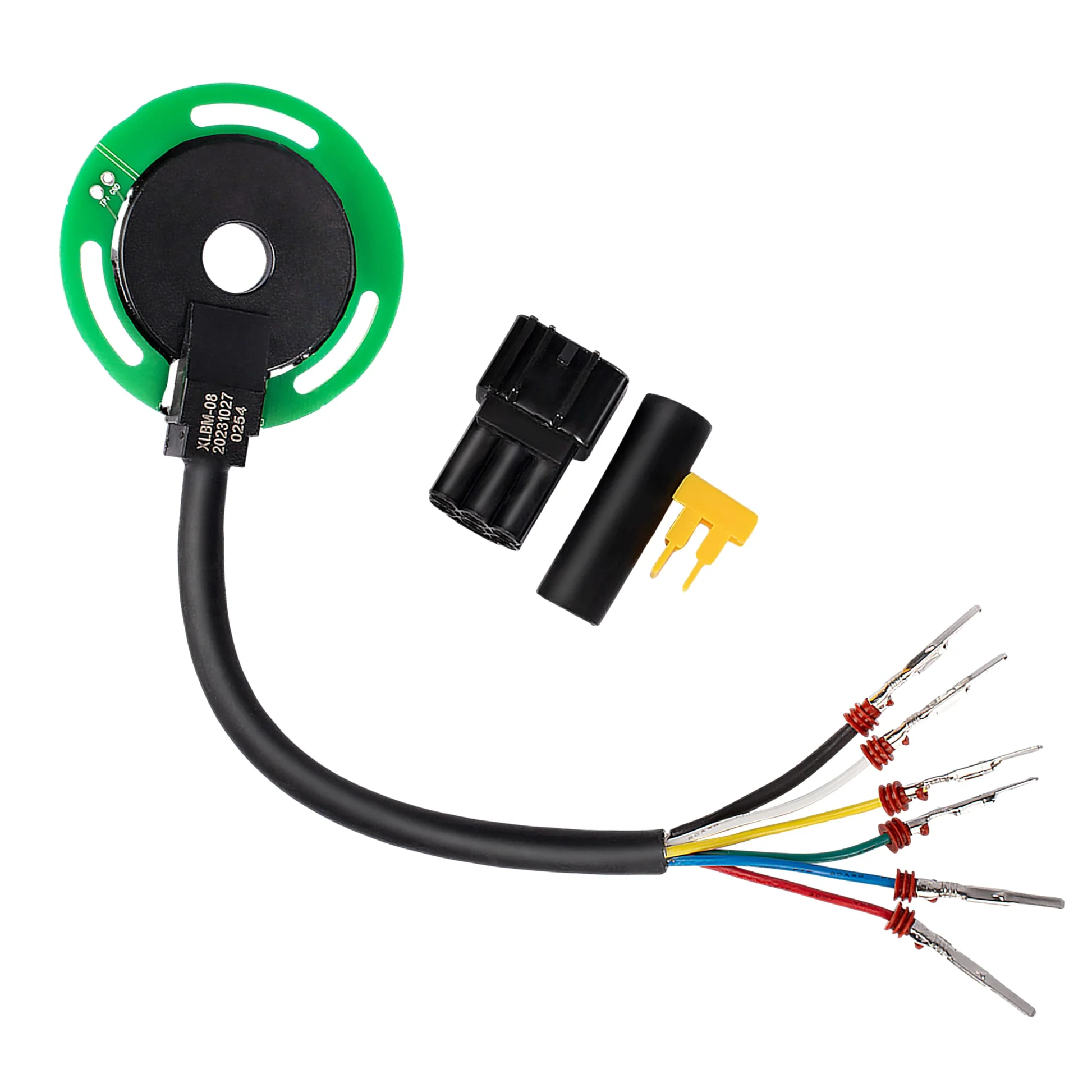
Buy Sur-Ron Light Bee Hall Sensor Online In Europe.
Buy Sur-Ron Light Bee Hall Sensor Online In Europe. At the heart of its motor control system lies a small but essential component known as the Hall Effect Sensor (or Hall sensor), which plays a critical role in enabling the smooth and accurate operation of the electric motor. Where can I Buy Sur-Ron Light Bee Hall Sensor Online In Europe | Where can I Order Sur-Ron Light Bee Hall Sensor Online In Europe | Cheap Sur-Ron Light Bee Hall Sensor for sale online in Europe | Fairly used Sur-Ron Light Bee Hall Sensor For Sale Online In Europe
While often overlooked by casual riders, understanding the Hall sensor’s role is vital for enthusiasts, mechanics, and engineers interested in optimizing performance or troubleshooting issues. This article explores the technical workings, importance, types, installation, failure symptoms, diagnostics, and upgrades related to the Hall sensor in the Sur-Ron Light Bee.
2. What is a Hall Sensor?
A Hall sensor is a transducer that varies its output voltage in response to a magnetic field. It works based on the Hall effect, discovered by Edwin Hall in 1879. When a magnetic field is applied perpendicular to the flow of electric current in a conductor, it generates a voltage (the Hall voltage) transverse to the current. This property is used to detect the presence, polarity, and strength of a magnetic field.
In Electric Motors
In the context of brushless DC (BLDC) motors—like the one used in the Sur-Ron Light Bee—Hall sensors are installed inside the motor to detect the rotor’s position. The motor controller uses these signals to properly time the commutation sequence (the switching of phases), which is critical for efficient and smooth motor operation.
3. The Role of Hall Sensors in Sur-Ron Light Bee
The Sur-Ron Light Bee uses a BLDC (Brushless DC) motor, which requires position feedback to operate efficiently. Unlike brushed motors, where commutation is mechanical, brushless motors need an electronic method to determine the rotor position.
How It Works:
-
The rotor of the motor contains permanent magnets.
-
Hall sensors are placed at 120° intervals around the stator inside the motor.
-
As the rotor spins, the sensors detect changes in magnetic polarity.
-
The controller reads these signals and determines the rotor’s position.
-
The controller then energizes the appropriate motor windings to continue rotation.
This process repeats thousands of times per second to ensure smooth and responsive acceleration.
Sur-Ron Configuration:
The Sur-Ron motor typically uses three Hall sensors, each providing a binary signal (high or low). These signals are interpreted as a 3-bit code, which gives the controller six possible states (excluding 000 and 111, which are invalid in most configurations), allowing it to determine both position and direction. Buy Sur-Ron Light Bee Hall Sensor Online In Europe
4. Why Hall Sensors are Critical
Without properly functioning Hall sensors, the Sur-Ron motor would be “blind” to the position of the rotor, resulting in:
-
Failure to start
-
Jittery acceleration
-
Loss of torque
-
Motor overheating
-
Reduced efficiency
-
Total shutdown
Hall sensors are essential for low-speed torque, starting from a standstill, and precise throttle response. While some advanced controllers use sensorless operation at higher speeds, they still rely on Hall sensors at low RPMs.
5. Construction and Location
Where Are the Hall Sensors?
In the Sur-Ron Light Bee, the Hall sensors are:
-
Embedded inside the motor casing
-
Typically mounted on a small circuit board near the stator
-
Oriented precisely to interact with the magnetic field of the rotor
These sensors are sealed to protect against dust, water, and vibration. However, over time, exposure to heat and mechanical stress can degrade them.
6. Wiring and Color Coding
The Hall sensors are connected to the motor controller via a small wire harness, usually with 5 wires:
| Wire Color | Function |
|---|---|
| Red | +5V Power |
| Black | Ground (GND) |
| Yellow | Hall A Signal |
| Green | Hall B Signal |
| Blue | Hall C Signal |
In some cases, manufacturers may use different color codes, so always confirm with your wiring diagram or controller documentation.
7. Common Hall Sensor Issues
Symptoms of a Failing Hall Sensor:
-
Motor not starting
-
Jerky or stuttering acceleration
-
Intermittent motor power
-
Motor spins backward or vibrates
-
Error codes on the controller or display
-
Reduced power and top speed
-
Bike only runs at high RPMs (controller switches to sensorless mode)
Causes of Failure:
-
Overheating: Heat damage from prolonged high current draw
-
Moisture ingress: Despite sealing, prolonged water exposure can corrode contacts
-
Mechanical stress: Impacts or vibrations can dislodge the sensor
-
Wire damage: Broken or shorted signal/power wires
-
Aging components: After years of use, solder joints and ICs degrade
8. Testing the Hall Sensors
Tools Needed:
-
Multimeter (with diode test mode)
-
5V power supply (if testing off-bike)
-
Motor test device (optional)
-
Oscilloscope (advanced diagnostics)
Basic Method (In-Bike Test):
-
Disconnect the Hall sensor plug from the controller.
-
Turn the bike ON (or apply 5V externally).
-
Set the multimeter to DC voltage.
-
Connect the black probe to GND, red probe to each signal wire (yellow, green, blue), one at a time.
-
Slowly rotate the rear wheel.
-
You should see the voltage on each signal wire toggle between ~0V and ~5V as the magnets pass the sensor.
What You Want to See:
-
All three Hall wires toggle consistently
-
No stuck high or low values
-
No noise or erratic behavior
If one or more Hall sensors do not toggle or show erratic voltage, they may be damaged. Buy Sur-Ron Light Bee Hall Sensor Online In Europe
9. Replacement and Repair
Replacement Options:
-
OEM Motor Replacement: Expensive (~$300–$600)
-
Hall Sensor Replacement Kit: Affordable (~$10–$30)
-
DIY Repair: Involves opening the motor and replacing Hall sensors manually
Steps for DIY Replacement:
⚠️ Note: This procedure requires mechanical skill and voids warranties.
-
Remove the motor from the frame.
-
Open the motor casing using proper tools.
-
Locate the Hall sensor board.
-
Desolder old sensors.
-
Replace with new ones (commonly used models: SS41, A3144, or similar).
-
Reassemble carefully and seal the motor.
-
Test thoroughly before riding.
10. Upgrades and Sensorless Alternatives
Some performance riders opt for sensorless controllers, which use back-EMF detection instead of Hall sensors. These controllers work well at higher RPMs but may suffer from poor low-speed performance. Buy Sur-Ron Light Bee Hall Sensor Online In Europe
Popular Upgrades:
-
ASI BAC4000/BAC8000 or VESC-based controllers: Offer both sensored and sensorless modes
-
QS Motor-compatible sensors: For upgraded motors
Sensorless upgrades may improve reliability by eliminating the most common failure point (the sensor itself), but they require expert tuning and often cost more.
11. Preventive Maintenance Tips
-
Keep the motor cool: Install heat sinks or vented covers
-
Avoid deep water crossings: Water can still seep in over time
-
Check wiring harness regularly: Look for cracks or exposed wires
-
Secure connectors: Use dielectric grease to prevent corrosion
-
Use quality controllers: Poor controllers can overheat sensors due to overcurrent
12. Hall Sensor vs Encoder vs Resolver
As electric bikes evolve, some systems now use rotary encoders or resolvers instead of basic Hall sensors for more precise feedback.
| Feature | Hall Sensor | Encoder | Resolver |
|---|---|---|---|
| Accuracy | Moderate | High | Very High |
| Cost | Low | High | High |
| Complexity | Low | Moderate | High |
| Durability | Moderate | Low | High |
For Sur-Ron users seeking the highest performance, upgrading to an encoder-based system with a compatible controller is an option—but it’s complex and generally overkill for most riders. Buy Sur-Ron Light Bee Hall Sensor Online In Europe
13. Real-World Feedback
Sur-Ron riders frequently encounter Hall sensor issues after:
-
Hard off-road riding
-
Water crossings
-
Prolonged hill climbs
-
Improper upgrades or cheap controllers
Online communities (like Facebook Sur-Ron groups, Endless Sphere, and Sur-Ron forums) provide real-time user feedback on sensor failures, replacement experiences, and compatible upgrades. Where can I Buy Sur-Ron Light Bee Hall Sensor Online In Europe | Where can I Order Sur-Ron Light Bee Hall Sensor Online In Europe | Cheap Sur-Ron Light Bee Hall Sensor for sale online in Europe | Fairly used Sur-Ron Light Bee Hall Sensor For Sale Online In Europe
14. Conclusion
Though small and often hidden from view, the Hall sensor is a fundamental component in the Sur-Ron Light Bee’s motor system. Understanding its role, recognizing failure signs, and knowing how to test or replace it can save riders time, money, and frustration.
In a high-performance electric dirt bike like the Sur-Ron, every component must work in harmony to deliver torque, speed, and responsiveness. The Hall sensor ensures the brain (controller) and the muscle (motor) stay perfectly synchronised. Sur-Ron Light Bee Hall Sensor Spare shop in Europe | Sur-Ron Light Bee Hall Sensor spare part vendor In Europe | Sur-Ron Light Bee Hall Sensor Spare Part Dealer shop in Europe.
Whether you’re maintaining your stock motor, planning an upgrade, or deep in diagnostics, appreciating the humble Hall sensor is a step toward mastering your Sur-Ron’s full potential.
Reviews
There are no reviews yet.